It Started With a $180 “Save”
First Friday in March, 2023. A maintenance tech walked into my office with a dead proximity switch in his hand and said, “I need the Turck part number—the one we used last year.” I had been in the purchasing seat for about six months, and I had never heard the brand. I pulled up the old order, searched for Turck proximity sensors, and picked a supplier whose quote was lower than our regular vendor’s by almost 20 percent. I saved maybe $180 on that order. It still makes me wince to think about it.
I manage purchasing for a 150-person manufacturing company. There isn’t a full procurement department—just me. We have a maintenance floor, a tool crib, and a small QC lab that runs a couple of HPLC systems. I process roughly 80 orders a year across eight or nine vendors. My official title is office administrator, but the job is mostly saying, “yes, it’s on order,” and then explaining why it isn’t here yet. I report to both operations and finance, which means I hear about it when a part is late and when a bill doesn’t match the PO.
When I first started managing vendor relationships, I assumed the lowest quote was always the best choice. That’s the way personal shopping works, sort of. A price is a price. It took two years and a few budget overruns to understand that a quote is never just a number—it’s a set of promises about what happens after you pay.
The Turck Proximity Sensor Lesson
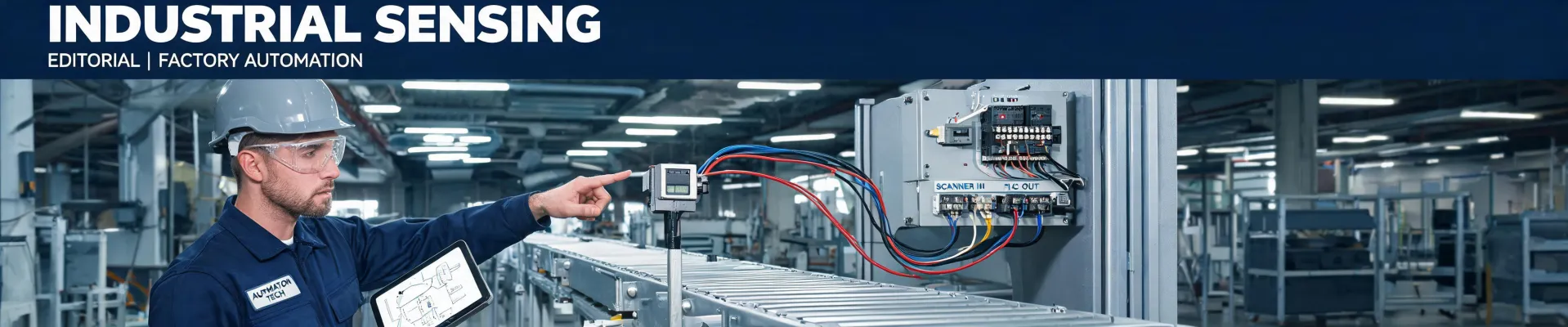
The $180 “save” happened because the supplier listed the same part number: an M18 inductive sensor with a 10 mm sensing range, PNP NO. But the fine print was different. The cheap vendor’s invoice did not include a certificate of conformity, a lot traceability code, or a datasheet. I didn’t know that mattered. When one of those sensors failed on a machine three months later, we couldn’t prove which batch it came from or whether it was a legitimate Turck product. The warranty claim dragged for six weeks. As a stopgap, the maintenance manager swapped a spare sensor from a machine that was already down. That caused two service calls and a production delay.
The original $180 savings looked a lot smaller after we paid for a rush replacement, an extra service call, and the hours I spent chasing paperwork. The regular supplier’s quote had included the certificate and lot traceability from the start. The price was higher on the line item, but the total cost was lower. That was my first lesson in asking, “What’s not included?” before asking what it costs.
The Turck Ultrasonic Sensor Quote
A month after the proximity switch incident, a process engineer asked me to quote a Turck ultrasonic sensor for a tank level application. I braced for another rabbit hole. But this time I tried a different approach. I told the vendor, “Send me the complete list of parts and costs, including the stuff I didn’t ask for.”
One quote came in lower for the exact sensor. Then I saw the caveats: the mounting bracket was extra, the IP68-rated connector was extra, and the cable was extra. The other vendor’s quote was about 12 percent higher, but it included all of those pieces plus a technical note on how the sensor should be mounted to avoid false echoes. When I added the missing line items to the first quote, the difference almost disappeared. The higher quote was, in effect, the same price—with the information attached.
That’s the thing about transparency. To me, a transparent quote isn’t necessarily the cheapest quote. It’s the one that lets me make a real comparison. If a vendor hides the extras until the PO is signed, I can’t compare anything.
The Spectrophotometer That Forced Me to Read the Fine Print
I thought the sensor lesson was specific to sensors. Then the QC lab needed a spectrophotometer.
We got three quotes. The lowest-priced one was for a base instrument only. The middle quote included software but no calibration certificate. The highest quote, from a vendor we had worked with before, included the instrument, a NIST-traceable calibration certificate, installation verification, and two hours of operator training. On paper, it looked like the most expensive option by a comfortable margin. In practice, it was the only quote that would have let us use the instrument for compliance work right away. The other two quotes would have required additional purchases and scheduling separate vendor visits.
I don’t have hard data on how many lab purchases get delayed because of hidden costs, but based on that experience, my sense is it happens more often than anyone admits. I wish I had tracked the exact difference. What I can say anecdotally is that the “cheaper” spectrophotometer path would have cost us at least a week of lab time and an extra purchase order.
A Four-Minute Lesson About Documentation
Not every documentation problem is expensive. Around the same time, an electrician came by and asked if I could find the 77 multimeter manual. He had an old Fluke 77 in his tool bag and couldn’t remember what the beep meant in a certain mode. I found the PDF on Fluke’s website in maybe four minutes. No cost, no drama. It was a useful reminder that documentation can be easy when a manufacturer posts manuals openly.
The contrast stuck with me. A free manual shows what good documentation looks like. A vendor that can’t provide a certificate, a manual, or a lot code for parts you just bought is the opposite. Documentation is not an administrative afterthought. It’s part of the product.
The HPLC Column Question That Had No Simple Answer
The most humbling question came from our QC supervisor. She asked, “How often to change your columns HPLC Agilent?”—her exact words. I had no idea.
I assumed the answer was a fixed number, like every 500 injections. That would have been easy to put in a purchase schedule. But Agilent’s column care literature, which I found as of January 2025, says there isn’t a universal interval. You monitor backpressure, theoretical plate count, peak symmetry, and retention time drift. You change the column when those indicators tell you the column no longer meets your method’s needs. There are best practices for storage and regeneration that can extend column life, but a rigid calendar schedule can waste money or lead to poor data.
That changed how I thought about buying consumables. A supplier who promised a one-size-fits-all replacement schedule was selling simplicity, not accuracy. The vendor who explained when not to change columns—and offered a reasonable spare-column program—won the order. That purchase did not cost the least. It cost what it needed to cost.
What I Do Differently Now
By spring 2024, I had changed my quote review process. I still look at price, but I look at other things first:
- Is the part number exact and the manufacturer authorized?
- What is included: cables, brackets, connectors, calibration, software, certificates, manuals?
- What happens if it fails in six months? Who answers the phone?
- What does the quote not say? That’s usually the most important question.
That last question is why I now tell every vendor, “Send me a quote with all the line items up front, even the ones I didn’t ask for.” Some vendors say that’s odd. The good ones send a complete list.
To be fair, a low quote is not automatically a trap. There are honest suppliers with lower overhead and better buying power. The point is not to assume the cheap option is wrong. The point is to find out what you’re actually comparing. A quote that hides costs is not a quote; it’s a teaser. A vendor who lists all fees up front—even if the total looks higher—usually costs less in the end.
This was all based on quotes from 2023 and early 2024. Prices for sensors, lab instruments, and consumables move quickly, so verify current rates before you build a budget. But the lesson, I think, is slower to change: the real price is the one that shows up after the part is installed, the column is running, and the invoice is paid.

Marcus Feld is an electrical test and measurement analyst specializing in multimeters, oscilloscopes, clamp meters, insulation testers, spectrum analyzers, and data loggers. He applies IEC 61010-2-030 and IEC 61010-031 concepts while examining measurement category, bandwidth, true-RMS response, input loading, and stated uncertainty. His work helps maintenance engineers and test teams choose safe instruments with performance suited to the signals and environments they actually measure.
Leave a Reply